Buying in Hollywood Hills West can feel exciting right up until you realize that two homes with the same bedroom count can have very different risks, rules, and long-term value. If you are drawn to the views, architecture, and privacy that make this area so appealing, you also need to understand how slope, access, permitting, and hazard review shape the buying process. This guide will help you look past the listing photos and evaluate a hillside property with more clarity and confidence. Let’s dive in.
Understand Hollywood Hills West Micro-Locations
Hollywood Hills West is a broad neighborhood-council area, not one uniform pocket. Its boundaries stretch across a large section of Los Angeles, which means one block can live very differently from another in terms of slope, street access, privacy, and buildability.
That matters when you shop for a home. In practice, the best comparison is usually not just the neighborhood name, but the specific street, the lot’s position on the slope, and whether the parcel sits on a ridge, a canyon edge, or a lower-slope transition area.
The housing mix also varies by micro-location. The area is generally known for hillside residential homes, with density and housing type changing depending on where you are within the broader area.
Why Hillside Homes Need Different Analysis
A hillside house should never be judged the same way you would judge a flat-lot property. In Los Angeles hillside areas, the Baseline Hillside Ordinance changes how size and form are evaluated, and that can affect both what exists today and what may be possible later.
For example, permit applications in hillside areas can require a slope analysis map. Maximum residential floor area is also calculated using slope bands, not the simpler rules many buyers expect on flatter lots.
Certain design elements are treated differently too. Breezeways, ceilings over 14 feet, sunken rooms, patios, and basements can all affect how a home feels compared with how its permitted floor area is counted.
If you care about design, this is especially important. A home may feel open, light-filled, and generous in ways that do not show up clearly in the basic square footage, so you want to evaluate circulation, indoor-outdoor flow, and the relationship between levels, not just the bedroom and bath count.
Look Closely at the Lot
In Hollywood Hills West, the lot is often as important as the house. A strong floor plan can still come with a challenging site, and that site can affect comfort, maintenance, insurance conversations, and future renovation options.
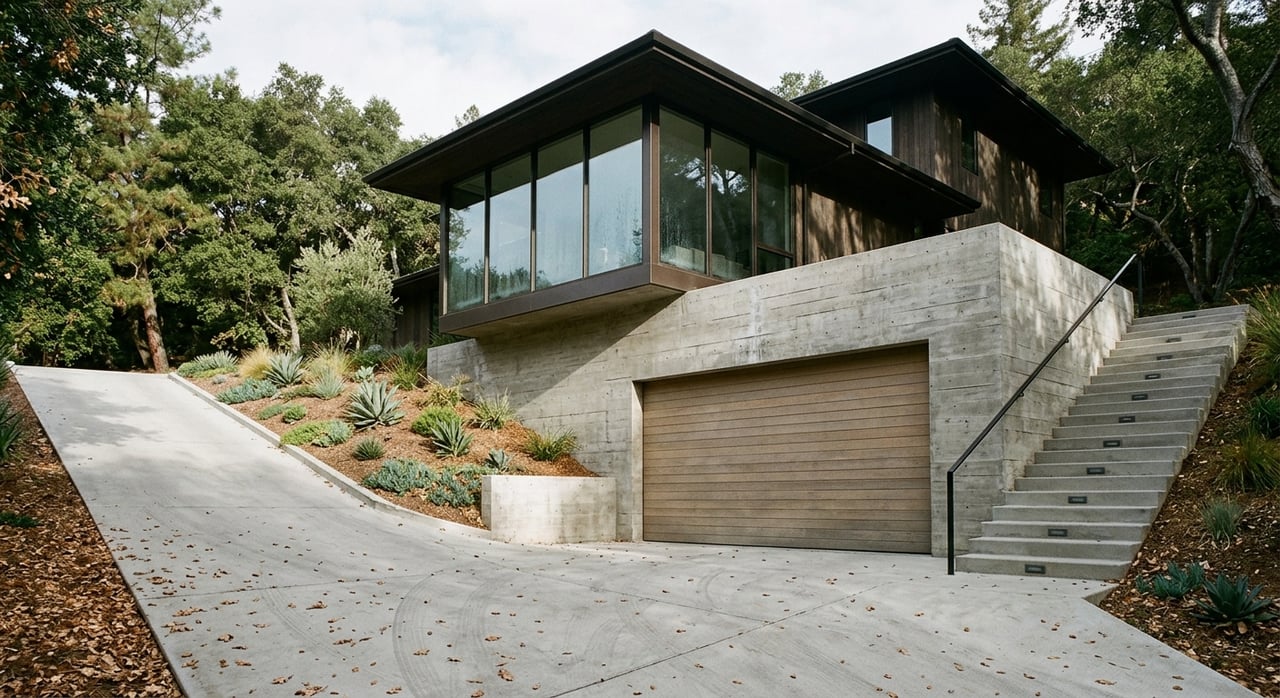
Start with slope and topography. The same hillside conditions that create views and separation can also create complications with drainage, retaining walls, terracing, and access for future work.
Then look at how the home sits on the land. A property above or below neighboring pads may feel private from one angle and exposed from another, so it is worth studying window placement, terraces, pool areas, and the primary living and sleeping spaces in relation to the actual grade.
Access Can Affect Daily Life
In hillside neighborhoods, access is not a small detail. It can influence convenience, serviceability, parking, and the cost or complexity of future improvements.
On lots fronting substandard hillside limited streets, the City can require street dedication, minimum roadway widths, and added parking rules. If the roadway width is under 20 feet, additional approval may be required before building or grading permits are issued.
For you as a buyer, that means the driveway, garage layout, and street conditions deserve careful attention. A house can look perfect online but feel very different when guest parking is limited, the driveway grade is difficult, or large service vehicles have trouble reaching the property.
It is also smart to think beyond move-in day. If trucks, tradespeople, or emergency services would have difficulty accessing the home, that can affect both day-to-day livability and future project planning.
Renovation Plans Need a Reality Check
Many buyers in this part of Los Angeles hope to personalize a home after closing. In Hollywood Hills West, that is a reasonable goal, but it needs to be tested against actual hillside rules and permit history.
LADBS states that grading permits are required for many common hillside activities, including hillside grading, removals and recompaction, backfill, slope repairs, landslide repairs or removal, basement excavations, pool excavations, and retaining-wall cuts or backfill. So even work that seems straightforward can become more involved on a hillside parcel.
Soils and geology reports are also usually required before permits are issued for hillside grading work. Those reports often address slope instability, earthquake-induced landslides, liquefaction, and nearby fault zones.
Some subareas are further covered by Hillside Construction Regulations. Those rules can limit construction work hours and exterior lighting during construction, which is especially relevant if you are buying with a remodel in mind rather than seeking a turnkey home.
Treat Views as a Site Condition
Views are a major reason buyers shop the hills, but they should be treated as a site condition to verify, not a promise to assume. In some parts of the area, view protection and visual impact are part of the planning framework.
Under the Mulholland Scenic Parkway ordinance, scenic and recreational resources, including mountain, ocean, and city views, are intended to be protected and enhanced. Depending on the parcel and project, the review process can require materials such as a visibility study and viewshed analysis.
That does not mean every view is guaranteed forever. It means you should confirm how the parcel is situated, what planning overlay may apply, and whether future changes on or around the property could affect what you see and how the home relates to its surroundings.
Review Records Before You Commit
A competitive offer should still be backed by disciplined due diligence. California’s Department of Real Estate advises buyers to read seller disclosure documents, review special taxes and assessments, and use escrow and title professionals.
The preliminary title report is important because it can identify ownership history, liens, and encumbrances. Seller disclosures are also key because they address physical condition and hazards, which are especially important in hillside transactions.
You should also review City records. LADBS provides access to online building records, and permit history can be very revealing when you are trying to understand whether a retaining wall, terrace, pool, addition, or basement was properly permitted.
This is one of the most important steps in a design-forward hillside purchase. A feature that adds value visually may create risk later if its permit path is unclear.
Check for Specific Plan Rules
Some Hollywood Hills West properties may fall under the Mulholland Scenic Parkway or another planning overlay. If they do, your review should go beyond a basic permit check.
The City’s application portal indicates that Mulholland administrative clearance can require permit history, photographs of the existing house, and proposed plans. The design packet can also call for a slope analysis form, floor plans, elevations, site sections, and a viewshed analysis.
There are also limits on streamlined clearance in certain locations. Parcels within 200 feet of parkland, 50 feet of a prominent ridge, or 100 feet of an identified stream are not eligible for that streamlined path.
For a buyer, the takeaway is simple. If you may want to expand, rework, or rebuild in the future, it is worth understanding early whether a specific plan adds more review steps.
Include Hazard Review in Your Offer Process
Hazard review is a core part of buying in the hills. Los Angeles emergency guidance notes that hillsides and canyons are vulnerable to wind-driven wildfire, landslides, and mudflows.
CAL FIRE and the Office of the State Fire Marshal classify land into fire hazard severity zones such as moderate, high, or very high. These maps are based on factors including vegetation, terrain, climate, embers, and fire history.
That review should be practical, not abstract. If a property has heavy vegetation, decks, uphill or downhill exposure, or a site layout that may require extra maintenance, you should expect conversations around home hardening and defensible space.
Insurance also deserves separate attention. California’s Department of Insurance states that CAL FIRE hazard maps do not determine insurance rates or availability, because insurers use their own wildfire risk models.
Confirm Seismic and Geologic Conditions
Seismic review matters in hillside purchases. The California Geological Survey states that seismic hazard zones and earthquake fault zones must be disclosed.
In addition, seller disclosure materials can include hazard information along with title, zoning, and use restrictions. This is one more reason to read the full disclosure package carefully rather than treating it as routine paperwork.
For hillside homes, geologic context can affect both safety planning and future project feasibility. If you are weighing two properties, stronger clarity around the site can make one option far more attractive than another, even if the homes look similar at first glance.
Think Like a Long-Term Owner
The best Hollywood Hills West purchases usually come from buyers who study the site as carefully as the architecture. In this market, value often comes from how well a property handles slope, privacy, access, views, hazard exposure, and the permit path for future changes.
That is why a design-savvy approach matters. You are not just buying finishes or square footage. You are buying a relationship between house, land, and city rules, and the quality of that fit can shape your experience for years.
If you are considering a purchase in Hollywood Hills West, it helps to work with someone who can look at both the design story and the practical realities behind it. To talk through a property, your search strategy, or the tradeoffs between hillside homes, connect with John Iglar.
FAQs
What should buyers know about Hollywood Hills West lot differences?
- Hollywood Hills West covers a broad area, so buyers should compare homes by street, slope position, access pattern, and whether the parcel sits on a ridge, canyon edge, or lower-slope transition, not by neighborhood name alone.
What makes a Hollywood Hills West hillside home different from a flat-lot home?
- Hillside homes are shaped by Los Angeles hillside rules, including slope-based floor-area calculations and permit requirements that can affect design, expansion potential, grading, and renovation complexity.
Why does access matter when buying in Hollywood Hills West?
- Street width, driveway grade, parking layout, and service access can affect daily convenience, guest parking, emergency access, and whether future building or grading work is more complicated.
What records should buyers review for a Hollywood Hills West property?
- Buyers should review seller disclosures, preliminary title reports, special taxes and assessments, and City building records to better understand hazards, ownership issues, liens, encumbrances, and permit history.
How should buyers evaluate views in Hollywood Hills West?
- Buyers should verify views as part of the site itself because some areas are subject to planning rules that consider visual impact, and a view should not be assumed to remain unchanged without review.
What hazard checks matter when buying in Hollywood Hills West?
- Buyers should review wildfire exposure, landslide and mudflow risk, insurance considerations, and whether the parcel is in a seismic hazard zone or earthquake fault zone as part of a disciplined offer process.